Posts in italian language
La Dolce Vita: Myth VS Realty

La Dolce Vita: Myth vs. Reality — The Truth About Daily Life, Work Culture, and Relaxation in Italy

A few things might come to mind when Italy-obsessed visitors think of the Boot-shaped peninsula: pasta and pizza, endless cones of gelato, magnificent coastlines and mountainous peaks, long, slow lunches, effortless style, and a “slow” life many from abroad admire. For decades, the notion of “la dolce vita,” meaning “the sweet life,”  has taken the world by storm, first thanks to the 1960 film by Federico Fellini, titled La Dolce Vita, which, in summary, romanticized Rome and Roman life, depicting the city streets as an open-air life museum of glamour, romance, indulgence, lust, and a luscious life. 
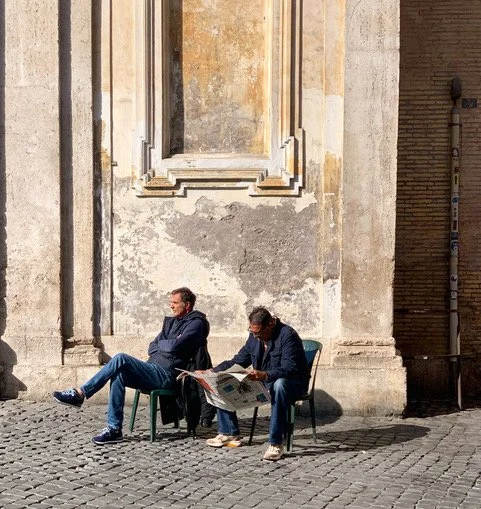
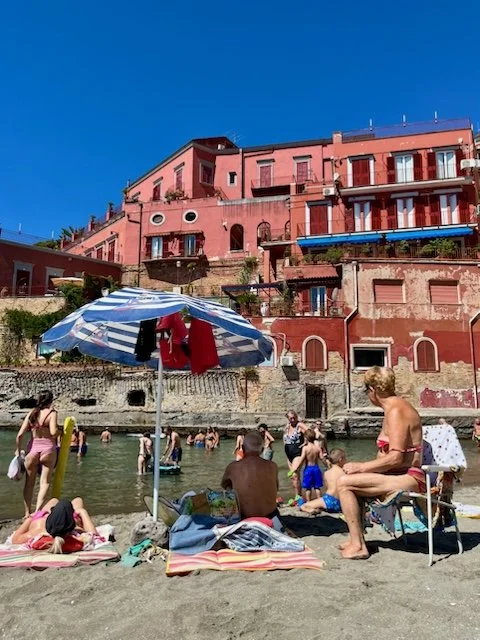
Today, if we aren’t finding the #ladolcevita hashtag on Instagram alone, which amounts to more than 1.8 million posts, our feeds are filled with relatives and acquaintances vacationing in Italy, sipping orangey-spritzes in the sun-drenched piazza, and boats to, from, and along the Amalfi Coast. Now again on screen as Netflix’s hit sensation Emily in Paris season 5 traded Paris for Rome and Italy, it once again depicts a fairy-tale like pipe dream that all of us who love Italy have fantasies about from time to time. 

But, for those who live and work in Italy, the truth behind this idea of la dolce vita is not always what one-trip visitors and life-long Italy-obsessed travelers have in mind. There is no doubt that Italy is home to incredible people, a decadent, diverse country-wide cuisine, and a terrain that offers everything: 7,000km of coastline, history, ruins, and the Renaissance. Yet what a picture-perfect TikTok video won’t always reveal is the daily reality millions of citizens and residents face, including modest salaries, increasingly demanding work schedules, economic challenges, and a further-fading idea of “balance.” To understand Italy in all its facets, beyond the myth, let’s take a look at what la dolce vita really means and how this life-long sweetness and struggle often coexist in day-to-day life. 
The Sluggish Salary

Italy is notoriously known for a wobbly job market, low pay, and a lack of job contracts, forcing many younger Italians to pack up and find a life elsewhere. Italy’s data agency, ISTAT, reported that a quarter of the Italian population, nearly 23%, were at risk of poverty or social exclusion at the end of 2024. Italy has had stagnant wages for decades, especially for young professionals, creating zero opportunities for growth, pay raises, and working bonuses. Entry-level salaries range from €1,200 to €1,600 per month. While some cities like Milan and Rome may offer slightly higher salaries, the cost of living and rental markets in these bigger cities have led Italians to pay up to 75% of their salaries in rent. To paint the picture, the average net earnings for a nurse are €1,500, a public school teacher €1,400–€1,600, and an engineer ~€1,950. Many in the service industries work under the table, without contract protection, and can expect fewer benefits and greater instability. 

Work Culture: The Not-So Reality of Endless Lunch Breaks

Shops across Italy, from small towns down south to bustling cities like Rome and Milan, may close for lunch from 1:30 to 4:30 pm, but most workers do not. Many sectors do not follow this tradition. For example, service industry workers, office employees, bankers, and staff at large retail chains typically have a short break before returning to their desks or shifts, resembling the traditional “9-5” or more like 8:30 to 6:00 pm. Many lunch breaks, 45 minutes to an hour, are sometimes spent on miscellaneous errands, like going to the post office, which is often closed by 1:00 pm in many parts of Italy. 

Bureaucracy: The Hidden Frustration

A classic reality of everyday Italian life is the famous word we hear even as visitors: bureaucracy. Yes, it is true. Many things in Italy do not work, and if they do, it takes the second or third time around to get things moving smoothly. Paperwork for permits, taxes, and residency can be extremely slow, complex, and unreliable. Small, one of the administrative tasks that seems simple, requires multiple stops, offices, and appointments to do something that should take 15 minutes. There is beauty in the hiccups of these stories, but living them day to day comes with tiredness and, quite frankly, a lot of delusion and frustration. 

Demographic Reality: The Falling Birth Rate

Financial insecurity and housing costs make family planning nearly impossible. As we discussed previously, the birth rate hasn’t risen in nearly 16 years. Italy and Italians absolutely love children in everyday settings, but the idea of having a child and raising them in Italy poses its own challenges. Day cares are increasingly difficult to get into, maternity leave for the mother and father is short-term, and the idea that the family unit will raise the young children is a very long-lost pipe dream for many Italians who no longer live close to family after moving to big cities to try and earn a decent living. 

Childcare and school schedules add another layer of complexity. 

Many schools close for the day at around 1–2 pm, and daycare or after-school programs close by 4:30 on the dot. The cultural norms of school life clearly do not align with working hours, forcing parents with full-time jobs to really rely on extended family and private help to make day-to-day life run somewhat smoothly. It is worth adding that Italy is one of the countries with the longest summer breaks in the world, with very few summer care solutions. 

Where La Dolce Vita Actually Exists

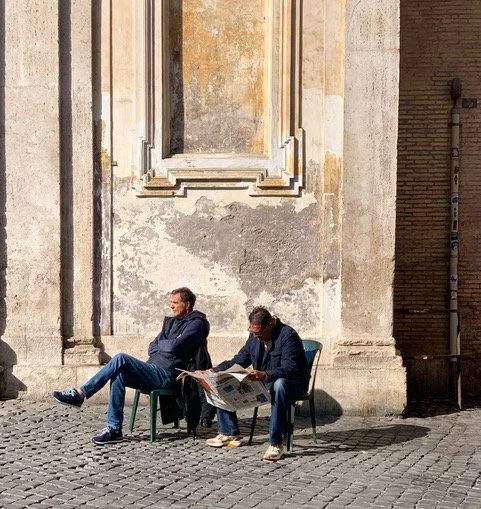
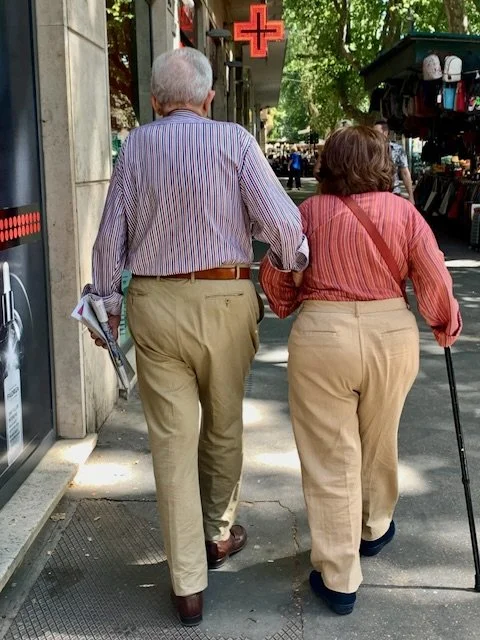
Aside from some harsh realities of Italian day-to-day life, at the end of the day, there are so many moments that we Italians may take for granted that could be part of this whole la dolce vita thing after all. There are small, everyday intentional moments ingrained in Italian culture—a quick 5 minute espresso at the bar to catch up with a colleague, the after-work aperitivo culture even during the most hectic days to take a minute and take a breath. Many Sundays remain sacred for family lunches, with multiple courses at home or an outing to a favorite local trattoria to celebrate the “day of rest.” In cities like Rome, Florence, Verona, and Naples, there is beauty just around every corner—art, churches, picturesque fountains and villas, and residents who see that beauty as part of everyday life, even in the most nuanced ways. 
Written by Gabriela R Proietti


Top 50 Italian Baby Names of 2023

Read below to get updated on the most popular Italian baby names of 2023.

It looks like the classic boys names are still trending…

  1. Leonardo

  2. Francesco

  3. Tommaso

  4. Edoardo

  5. Alessandro

  6. Lorenzo

  7. Mattia

  8. Gabriele

  9. Riccardo

  10. Andrea

  11. Diego

  12. Nicolò

  13. Matteo

  14. Giuseppe

  15. Federico

  16. Antonio

  17. Enea

  18. Samuele

  19. Giovanni

  20. Pietro

  21. Filippo

  22. Davide

  23. Giulio

  24. Gioele

  25. Christian

  26. Michele

  27. Gabriel

  28. Luca

  29. Marco

  30. Elia

  31. Salvatore

  32. Vincenzo

  33. Liam

  34. Thomas

  35. Emanuele

  36. Noah

  37. Alessio

  38. Samuel

  39. Nathan

  40. Giacomo

  41. Jacopo

  42. Giorgio

  43. Simone

  44. Ettore

  45. Luigi

  46. Manuel

  47. Damiano

  48. Daniele

  49. Domenico

  50. Daniel

Girls names are sometimes classic and other times not. Sofia, Aurora and Giulia are still in the top 3 and have been for some time.

  1. Sofia

  2. Aurora

  3. Giulia

  4. Ginevra

  5. Vittoria

  6. Beatrice

  7. Alice

  8. Ludovica

  9. Emma

  10. Matilde

  11. Anna

  12. Camilla

  13. Chiara

  14. Giorgia

  15. Bianca

  16. Nicole

  17. Greta

  18. Gaia

  19. Martina

  20. Azzurra

  21. Arianna

  22. Sara

  23. Noemi

  24. Isabel

  25. Rebecca

  26. Chloe

  27. Adele

  28. Mia

  29. Elena

  30. Diana

  31. Francesca

  32. Ambra

  33. Gioia

  34. Cecilia

  35. Viola

  36. Elisa

  37. Marta

  38. Emily

  39. Carlotta

  40. Margherita

  41. Sole

  42. Anita

  43. Maria

  44. Eleonora

  45. Amelia

  46. Alessia

  47. Nina

  48. Luna

  49. Giada

  50. Sophie

Italy's Language Landscape

The Unique Language Landscape of Italy

Termoli, Molise, Italy (Pic credit The Little Italian School)

Author: Anna Wolf

In Italy, people speak Italian – obviously, this is nothing new to you. And as an Italian enthusiast, you have probably also been told that there are an infinite number of regional and local dialects spoken all over the peninsula. But did you know that there are 12 (!) distinct languages other than Italian that are historically spoken in different corners of Italy?

There is for example Ladin, Franco-Provençal, or Catalan. In fact, as you can see on the map, Italy’s linguistic diversity resembles a disorganised patchwork of different language groups, spread all over the peninsula. It is estimated that in total about 3 million Italian citizens speak a so-called historic minority language.

As a lover of Italian language, you might want to practice your newly acquired Italian skills and travel to some Italian destinations. But if you go to Aosta, Sardegna or the Dolomites, you will be surprised to hear locals greeting you with: “Bonjour!” (French), “Ajò!” (Sardinian) or “Bun dé!” (Ladin) instead of the classical “buongiorno” that you would expect.

Italy’s linguistic minorities differ considerably from each other, in the numbers and in the way they are taught at school. For instance, while the German-speaking minority in the North, located in South Tyrol/Alto Adige, continues to have a stable number of speakers (approximately 360.000) and enjoys an elaborate protection system with German language schools, some smaller language groups such as the Croatian minority in Molise lack support and numbers are continuously decreasing.

But why do those communities within Italy speak these different languages, you are wondering? Well, historians will tell you that Italian has not always been the majority language of Italy. Back in time when Italy unified as a state (1861), all those culturally diverse regions were integrated into the new nation state. During the first decades after the unification, through the new school system, the population was educated in Italian – which then was a foreign language to many of them. A famous saying of those times was, “Fatta l’Italia, bisogna fare gli italiani!” (Having made Italy, we now have to make the Italians!).

The historic reasons why those different language communities were living on the peninsula are various: In the south, the Arbëreshë, were descendants of Albanian populations that had migrated there in several waves, starting in the 15th century. Even earlier, Greek populations had settled in Calabria and Puglia, where they continued to speak the “Griko” language. In the north, new linguistic groups became part of Italy as a result of the unification wars and of WW1: the French and Franco-Provencal speaking minority in Aosta, as well as the German speaking minority in South Tyrol and the Slovenian speaking minority in the region around Trieste. After WW2, Italy recognised the linguistic minorities present on its territory in its 1948 Constitution and committed itself to protect them.

So, the next time you meet an Italian person, you might ask them, if they by chance also speak a minority language. Maybe you will be surprised. Anyways, now you know how rich Italy’s linguistic diversity is - and that people in Italy do speak Italian… but not only!                       (~520 words)

Get Your Italian Fix by heading to these Top Perth Wine Bars & Eateries

Writer Grace Flynn

As an Australian, I was quite surprised to learn that the unofficial dinner time in Italy sits somewhere between 8pm and 9pm. This was especially puzzling to me considering the rather unfortunate scoff-a-sandwich-at-your-desk lunchtime ritual so many of us Aussies partake in. How can Italian’s stave off hunger until close to what may or may not be my unofficial bedtime? The answer would be aperitivo.

Along with honouring lunch or ‘pranzo’ as the main meal of the day, one of the key ingredients to the Italian eating schedule is aperitivo. Derived from the Latin verb ‘aperire’, meaning to open, the ritual of a pre-dinner drink and snack is about opening one’s appetite up before dinner while enjoying the company of friends and family. Although it’s not an everyday event, aperitivo is always an option in Italy, taking place at around 7pm or 8pm and typically involving a bitter alcoholic beverage, like the popular negroni or americano, alongside olives, cheeses, meats and bread.

Of course, the best way to learn anything is by doing. So, if you’re looking for the best joints in Perth to dabble in the age-old practice of the Italian aperitivo, we’ve got you covered.

La Sosta

Fremantle’s La Sosta has long been a favourite spot for Italian cuisine, boasting fresh homemade pasta dishes, authentic antipasti and an extensive wine list. Meaning ‘stopover’, La Sosta is certainly a top place to stop by for an afterwork drink and nibble, Italian-style. Staying for a full meal is also a good idea. Since opening in 2012, the family-owned restaurant has expanded over two levels and features an Insta-worthy alfresco dining area overlooking the city streets.

Source La Sosta Facebook

Mummucc’

Offering delectable Italian fare, an exceptional wine list and the best martini Tania has ever had (which is no small feat!), Mummucc’ is easily one of the best spots to aperitivo in Perth. Opened by Tania’s good friend Tania Nicolo alongside her partner Ryan Bookless, the elegant wine bar is situated just a stroll away from the couples’ popular pizzeria, Monsterella. Oh, and in case you didn’t know, Mummucc’ (pronounced ‘ma-mooch’) is Abruzzese dialect for ‘dearest mother.’

Source Mummucc’ Instagram

StreetFood dal Porco

This Beaufort Street beauty is being hailed as one of Perth’s most authentic Italian trattorias. If you’re looking to indulge in some proper Italian charcoal barbequed meats like ‘Bistecca alla Fiorentina’ , arrosticini, and mouthwatering crostini alongside your favourite birra or vino (StreetFood is BYO only), look no further

Source Streetfood Dal Porco Facebook

La Madonna Nera

Led by Fiona Di Lanzo, La Madonna Nera is a cosy Italian wine bar situated on Scarborough Beach Road in Mount Hawthorn. Showcasing native Italian varieties as well as Australian drops, La Madonna Nera’s wine list is sure to impress, along with its contemporary Italian menu.

Testun

Brought to Mount Lawley by the owners of well-known Italian trattoria Threecoins, neo-Italian osteria Testun is sure to surprise with its inventive menu and bold interiors. Located on Beaufort Street, the wine bar offers classic aperitivi like limoncello spritz, vermouth and olio martini, making it a great spot for Italophiles to enjoy a Friday bevvy.

Source Testun Facebook

7 Italian Phrases to Get You Sounding Like a Local

Pic Source - The Little Italian School (Pietracatella , Molise)

Grace Flynn- freelance writer

To a non-native speaker, the English language can sound like a string of riddles and strange phrases. But idioms like ‘beating around the bush’ and ‘sitting on the fence’ are linguistic common ground; they’re a creative and interesting way to express yourself founded on a shared cultural history. And when it comes to learning a new language, they’re one sure way to achieve fluency and sound like a native speaker.

While there are plenty of English idioms that Italian use (translated, of course), the Italian language has plenty of its own. You may have heard of some already like ‘in bocca al lupo’ which is used to say good luck but actually translates to ‘in the mouth of the wolf’ with its origin in hunting. Many will reply with ‘crepi’; should you end up in the mouth of the wolf, may it die.

If you’re looking to level up your Italian, sprinkle some of these classic idioms into your conversations and Bob’s your uncle or Roberto é tuo zio.

1.     Non vedo l’ora

Rather than saying ‘non posso aspettare’ for ‘I can’t wait’, opt for ‘non vedo l’ora’ which translates to ‘I don’t see the hour.’ Per esempio (for example), a sentence that always holds true: ‘non vedo l’ora di prendere il gelato.’

2.     Che palle!

This translates to ‘what balls.’ Say you’re stuck on the Mitchell Freeway in peak hour traffic or your local café has run out of your favourite pastry, you’d have every right to utter ‘che palle.’

3.     Buono come il pane

What’s better than bread? Niente (nothing), I tell you. That’s why this expression, which translates to ‘good as bread’ is sure to flatter someone. If you think someone is particularly kind, generous or is just a ‘good egg’ as English-speakers would say, you might like to say, ‘Matteo é buono come il pane’ or ‘Francesca é buona come il pane’. 

4.     Avere la luna storta

If someone’s sulking or is in a bad mood, you might hear the rather poetic phrase ‘ha la luna storta’ which translates to ‘you have a crooked moon.’

5.     Conosco i miei polli

A personal favourite of mine is ‘conosco i miei polli’ which translates to ‘I know my chickens.’ If you seem to know a person to the point you can easily predict what they’ll do, you might tell someone ‘conosco i miei polli.’

6.     Perdersi in un bicchier d’acqua

The Italian equivalent for making a mountain out of a molehill is ‘to lose yourself in a glass of water.’ If someone’s unnecessarily stressing out, you might say ‘non perderti in un bicchier d’acqua, andrá tutto bene.’

7.     Non mi rompere le scatole

If someone’s getting on your nerves, the Italian idiom ‘non mi rompere le scatole’ is perfect for conveying your annoyance. Meaning, ‘don’t break my boxes’, the expression also has some more colourful variations including ‘non mi rompi le palle’ which I’m sure you can translate by referring to idiom number two.


Image Source - The LIttle Italian School (Molise, Italy)

The Best Italian Language Series and Movies To Kickstart Your Learning Journey

Source : Netflix

Grace Flynn

The power of film can’t be understated, especially when it comes to learning a language. While DuoLingo tries to convince us that learning abstract phrases like ‘my aunty is wearing a purple sweater at the library’ will have you fluent in no time, I’d argue that TV series and movies could be the real ticket to learning a new language and a new culture.  

Or at least part of it.

Sparking a passion for the Italian language, culture and history, these streamable Italian-language TV series and movies are sure to have you picking up Italian phrases and colloquialisms in no time.

Rose Island

Where to watch: Netflix

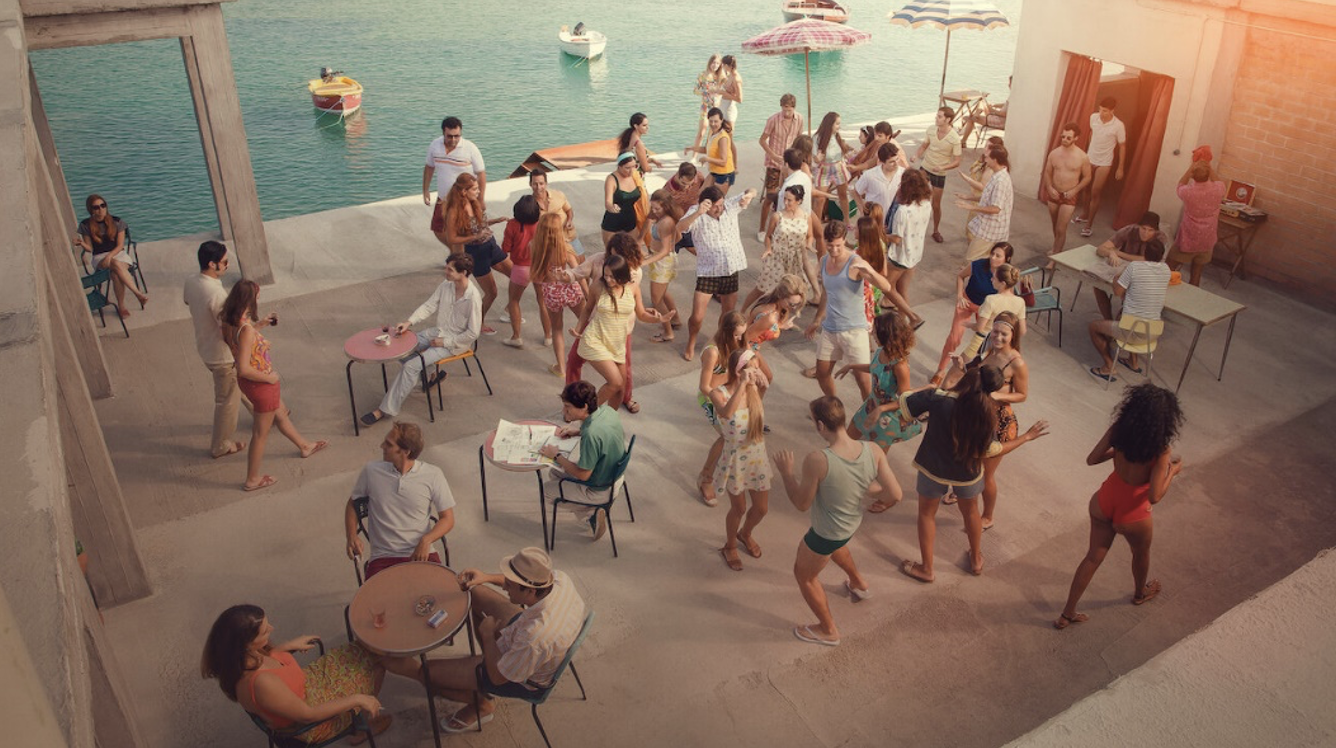
Set in the late 60s, Italian engineer Giorgio Rosa sets about building his very own nation out on a man-made platform in the Adriatic Sea, just outside of Italy’s territorial waters. Available through Netflix, this comedy-drama film tells the incredible story of Rosa’s battle with the Italian authorities in his quest to retain his independent state, L’isola delle Rose. Along with picking up some Italian vocab, this fun and quirky watch tells a true story that is sure to surprise.

Source : Netflix

Trailer link:

https://www.youtube.com/watch?v=qS2NtbEoIc8&ab_channel=Netflix

An Astrological Guide for Broken Hearts

Where to watch: Netflix

If you’re looking for a funny, feel-good series, look no further than Guida Astrologica per Cuori Infranti. Based on Silvia Zucca’s best-selling novel of the same name, this witty rom-com series follows heartbroken and hopelessly single Alice as she navigates dating in her 30s, friendship, an intense office romance and the supposed power of the stars. If you don’t watch this for the purpose of picking up modern Italian lingo and dating vocab, be sure to watch it for the drama!

Source: IMDb

Trailer: https://www.youtube.com/watch?v=O48gSeQGMC8&ab_channel=Netflix

Suburra: Blood on Rome

Where to watch: Netflix

Directed by Gomorrah’s Stefano Sollima, this gripping and bloody mafia series takes viewers on a journey into Rome’s underbelly. Inspired by true events, this highly rated Netflix series is perfect for those who enjoy a good crime and gangster show. And for those who are looking to pick up a few choice words in Italian.

Source: Netflix

Trailer: https://www.youtube.com/watch?v=5GcC9kduhO4&ab_channel=Netflix

Generation 56K

Where to watch: Netflix

Exploring the power of the internet and childhood crushes, Generation 56K is another bingeable rom-com Netflix series that’ll have you picking up some Italian vocab in no time. Flipping between present day and the late 90s, this heartwarming series tells a story of love and friendship set on the small island of Procida.

Source: Netflix

Trailer: https://www.youtube.com/watch?v=gMgg3v0fUOw&ab_channel=Netflix

Made in Italy

Where to watch: Google Play Movies

Set in 70s Milan, Made in Italy follows Irene, a university student who becomes enamoured with the glittering world of Italian fashion (think big brands like Missoni and Giorgio Armani). Exploring the political unrest of the time period, this historical drama series takes a look at Italy’s tumultuous youth revolution, the rise of feminism and the Italian fashion industry.

Source: Rotten Tomatoes

Trailer: https://www.youtube.com/watch?v=qg-FJiOHHGY&ab_channel=KylieFlavell

The Hand of the God

Where to watch: Netflix

Directed by Paolo Sorrentino, É stata la mano di Dio was nominated for Best International Feature Film at the Oscars. Set in 1980s Naples, the critically-acclaimed film follows a young Fabietto as he navigates grief and a budding passion for filmmaking. Touching on Italy’s enduring love of football (or more specifically, Maradona), this movie provides insight into Italian culture as well as the fascinating Napoletano dialect.

Trailer: https://www.youtube.com/watch?v=i_1VW_0i6vo&ab_channel=Netflix

Summertime

Where to watch: Netflix

Another romance series that’ll help you pick up some Italian phrases and colloquial language is Summertime. Set in a small town on the Adriatic coast, the series follows teenagers Ale and Summer who share a powerful attraction despite coming from different worlds.