Posts tagged christmas
’Tis the Season for L’Aperitivo'

’Tis the Season for L’Aperitivo: Bringing Italy’s Favorite Ritual Home

’Tis the season for… le feste! As we are heading full speed into December, the holidays—and soon the new year—are fast-approaching. It’s usually a time of last-minute gift runs, school vacations, visits with friends and family, and a second look at our holiday dinner menu that we’ve nearly perfected three or four times already. In Italy, all of the above certainly applies, but often even more so. Children are off for nearly three weeks, and festivities run until January 6th, leaving plenty of time to soak in the holiday cheer. But when the stress creeps up and you’re looking for a moment (or an hour or two) to sit down and reconnect with loved ones or friends who are in town for one reason or another, Italians suggest one thing and one thing only: l’aperitivo.

The Italian concept of the aperitivo is nothing new—and to be clear, it’s not the same thing as the traditional happy hour. So let’s take a look at its origins.

The Apero Origins 

Dating back to ancient Roman times, the early version of aperitivo involved small snacks washed down with a sweet wine. Fast-forward to the late 1700s, when the modern idea of aperitivo took shape in Turin (Torino). There, a local herbalist named Antonio Benedetto Carpano began experimenting with white wine infused with herbs, sugars, and spices. His creation, Vermouth, quickly became popular among Turin’s elite. This explains why northern Italian cities, from Venice and Turin to Milan, still have such an aperitivo-centric culture (but more on that later).

Though Vermouth paved the way for the modern 19th-century bitter craze, it really wasn’t until its ruby-red bitter friend, Campari, took the northern, specifically Milan, but storm. In 1860, Caspare Campari, following in Carpano’s footsteps in Novara, a small city west of Milan, created a super secret recipe of an infusion mix of herbs and plants that yielded an extra-bitter digestif (but not just any herbs and spices, but over 50 of them to yield what we know of Campari today. His son, Davide Campari, eventually followed in his father’s footsteps, taking the destination of the aperitivo ritual into his own hands by opening the Campari in Milan’s breathtaking Galleria. At this bar, Milanesi would socialize and drink a handful of cocktails with his famous Campari. 

What about Aperol, you may ask? It was invented around the same time as the opening of Campari’s famous bar, by brothers Luigi and Silvio Barbieri, who hailed from Padova, creating a bitter that was lighter and lower in alcohol than Campari after seven years of experimentation. By the time the early 20th century rolled around, the cultural concept of aperitivo had been ingrained heavily into Italian life, especially once the Venetians invented what may be the synopsis for aperitivo: the spritz—coming onto the lagoon scenes post WWI. 


From the cobblestones of Italy to your own cozy corners 

After that little history lesson and background on Italy’s most beloved past time, those of us who have experienced it firsthand and others who only dream about it, no fret! There’s no need to take an international flight to get your afternoon dose of Italy’s favorite pastime. There’s no better way to wine and dine your guests than with a little Italian-inspired aperitivo at home. It’s easy, yummy, and not to mention, a great way to spend quality time with loved ones in the comfort of your home when the holiday stress gets to you. So, what do you need? Let’s take a look below. 


The snacks

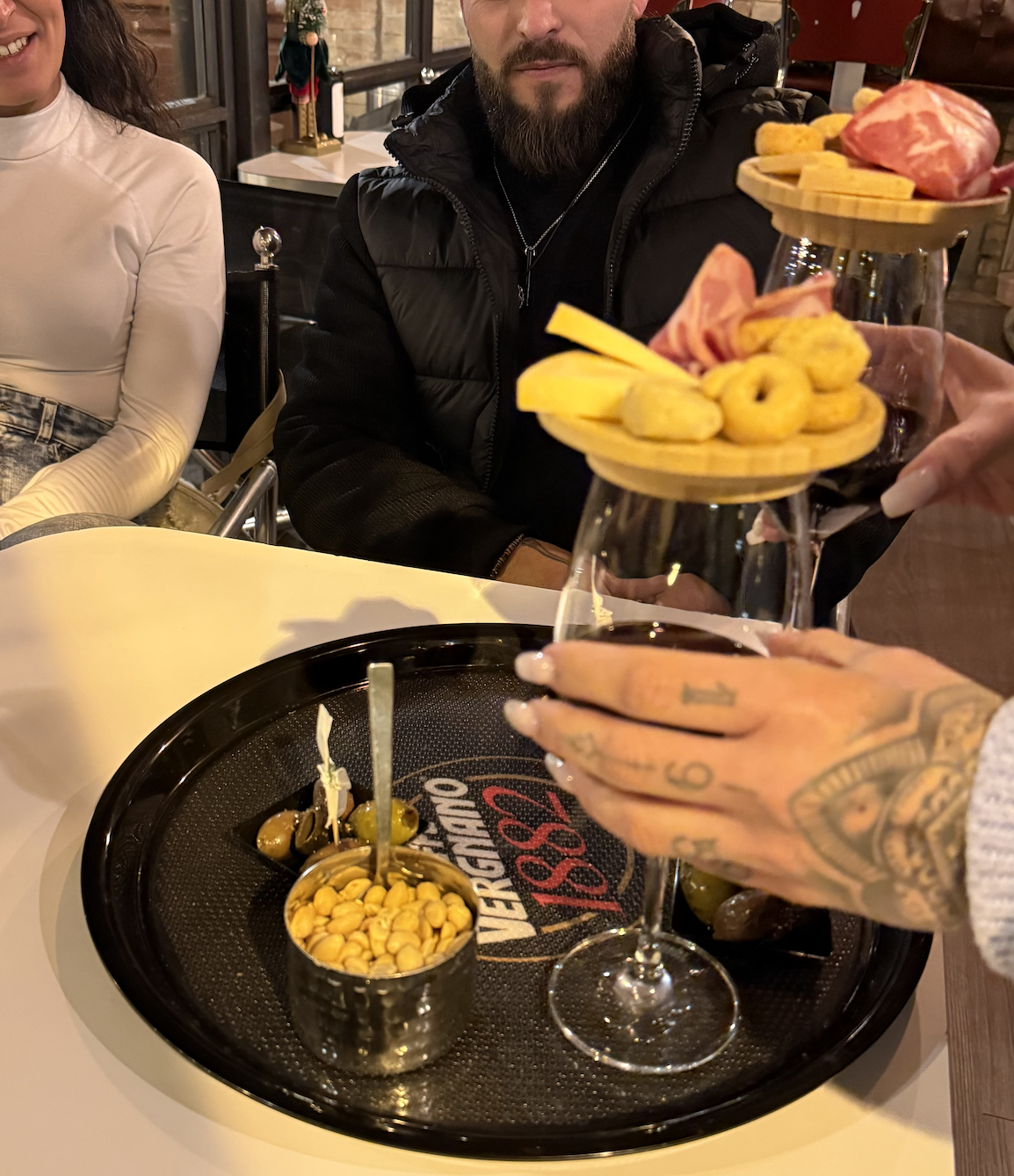
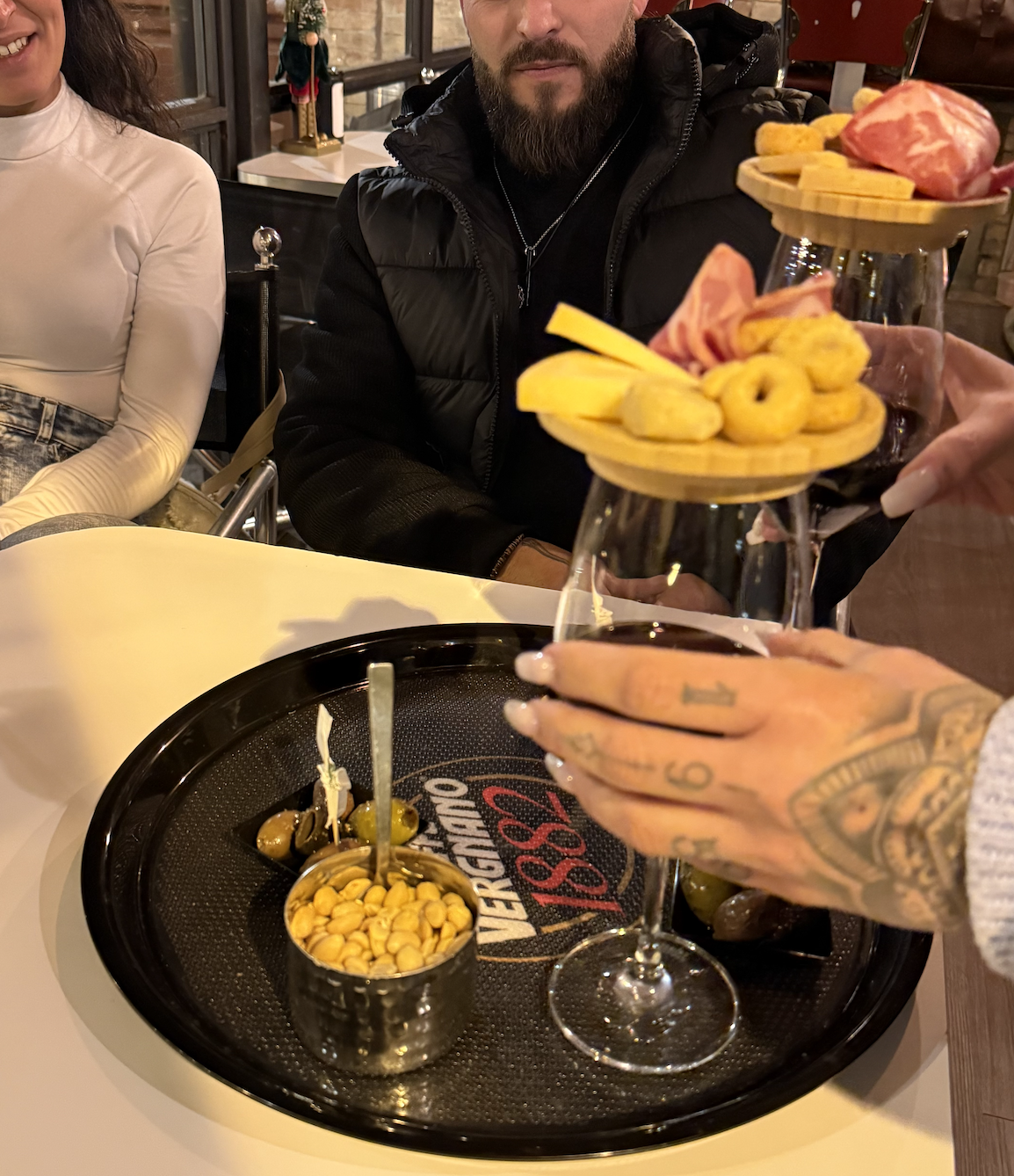
Shouldn’t the drinks come first? Well, it wouldn’t be an aperitivo without snacks, so let’s start here. After all, Italy is food-centric. The ideal snack tray for a killer apero, ones that are nearly served with every cocktail across Italy come 5 pm, the baseline trifecta is: a salty potato chip (never rippled), a beautiful glass bowl of bigger than life green olives, followed by even saltier peanuts…yes, embrace the salt attack come aperitivo hour! 

To take things up a notch, especially at home, a cheese and sliced cured cold cuts is always an excellent option. Think: chunks of Parmigiano Reggiano and thin slices of spicy salami or prosciutto. There’s also extra points for a dish of tarralli if you can get your hands on them, Puglia’s ring-shaped extra soft yet a bit brunchy cracker, or slices of focaccia. The snack options are endless, but start with some basics that complement the drinks. Reminder: the food at a typical Italian aperitivo is not meant to be a complete meal, as one would see at dinner. 


The drinks

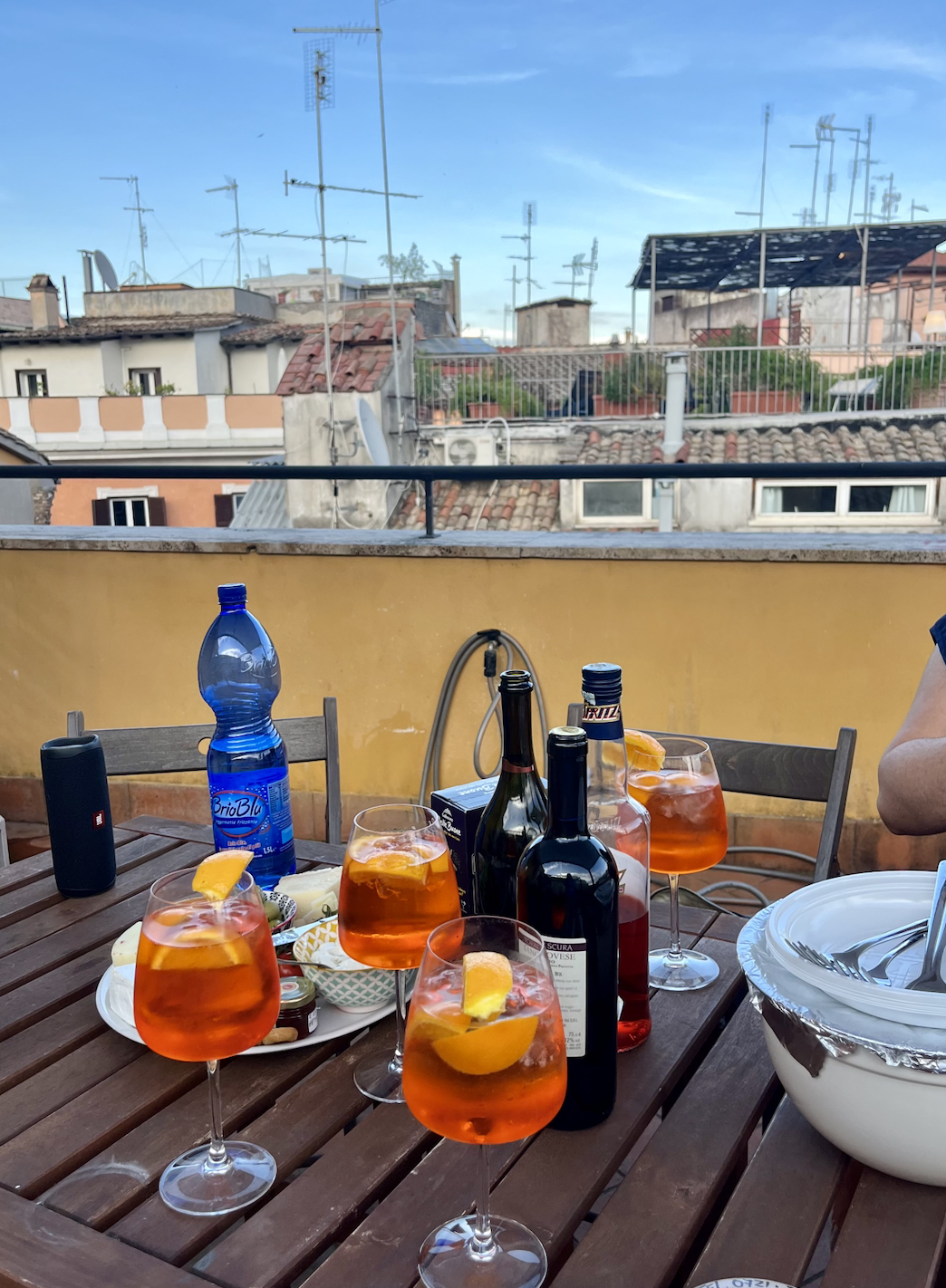
There is no right or wrong answer for what drinks should or shouldn’t be included at aperitivo hour, though, of course, variations of spritzes from Campari to Hugo and Aperol, a Negroni, and a gin and tonic do pop up regularly, along with an Americano. If you’re feeling a light glass of prosecco or white wine, these choices are excellent, too! Dead set on a Spritz? It is a classic, after all. Get the recipe right, which usually goes along the lines of: 1 part Aperol or Campari; 1 part prosecco; a splash of soda water; and perfectly sliced orange wedges for garnish along the rim. A Negroni, you make ask? Equal parts gin, sweet vermouth, and bitter Campari. 


The presentation & ambiance 

Have you got your drinks and snack menu ready, but something is lacking in the ambience? Even though the at-home aperitivo will never technically be like the one in Italy, it can certainly feel like it! How to set the mood? Start with a fun tablecloth that can immediately add charm, color, and a conversation piece. Use those ceramic dishes you’ve tucked away, or the oversized wine glasses and vintage cups inherited from a grandmother that have been stored in the china cabinet for “special occasions” only. If you were to ask an Italian, they would say that everyday life is a special occasion! 

Little details like these elevate the moment and create an atmosphere that feels effortlessly upscale and delightfully Italian. String lights are the perfect moody booster if you’re outside, or if you’re inside, a few candles. Last but not least, some music: this playlist on Spotify absolutely sets the aperitivo mood with the most beloved Italian classics.

Celebrating the Holidays like an Italian

Customs and Traditions: Celebrating the Holidays like an Italian 

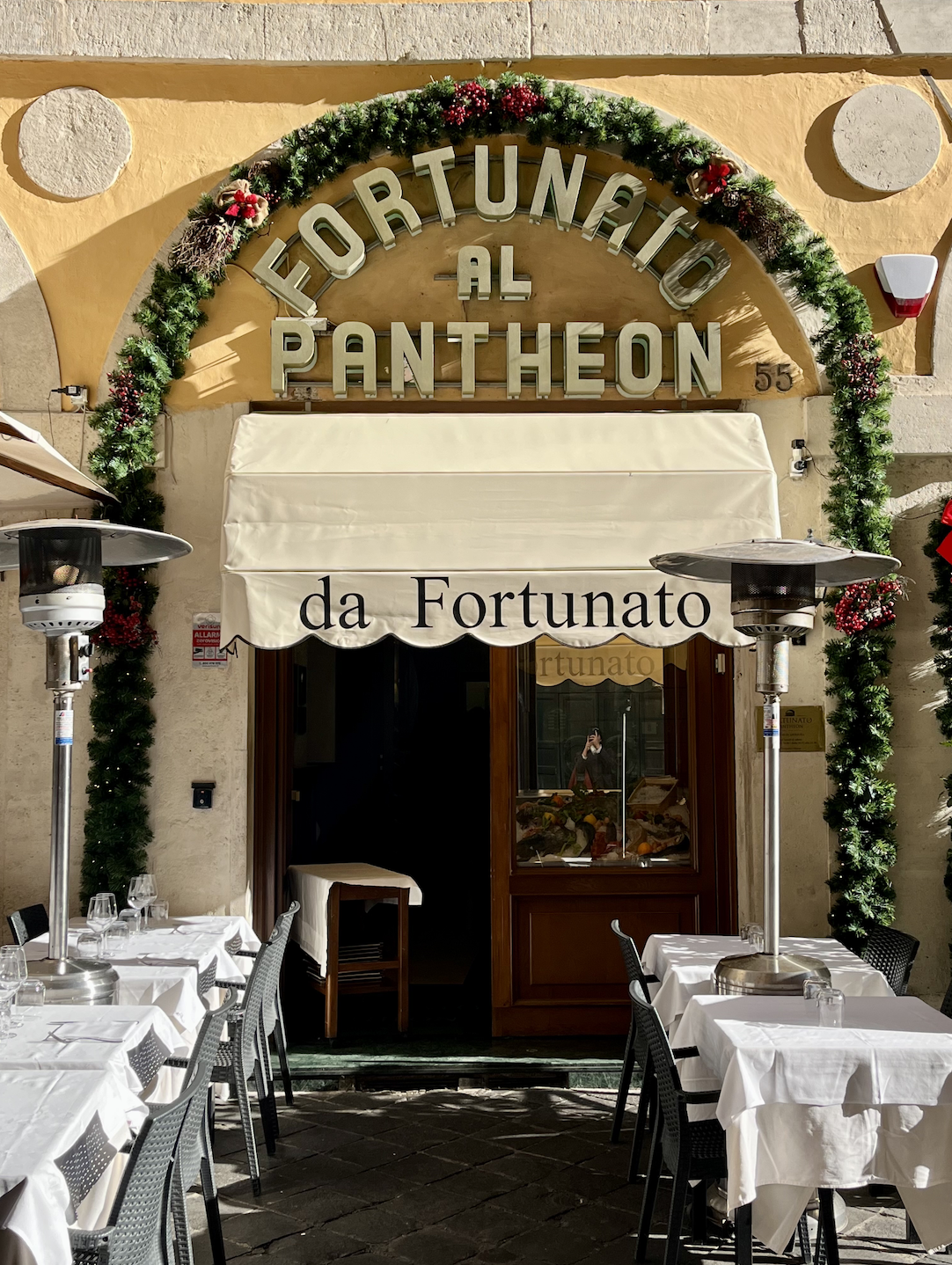
If you are spending time in Italy for the holidays, consider yourself fortunato/a! And if you’re dreaming of the magical Boot from afar, you’re not the only one. In honor of the most merry time of year, learn about some of Italy’s most historical and quirky customs and traditions for the holiday season!


Rocking Around the Christmas Tree 

Although city squares and mom-and-pop shops may hang their twinkly lights earlier than the beginning of December, most Italian families wait until the 8th for tree cutting, ornament hanging, and festival music playing. The 8th of December in Italy is the Feast of the Immaculate Conception. It is commonly reserved for a day when Italians decorate the tree as it is a national public holiday. Many families have the day off. This day also “kick-starts” the month-long festivities and holiday cheer! 


Presepi 

Throughout the month, from small hillside towns to big chaotic cities paint the town in spirit, setting up artisanal markets, baking seasonal goods, and presepi AKA nativity scenes. These presepi have deep roots in Italy, a tradition dating back to St. Francis of Assisi in 1223. However, aside from St. Francis, the annual tradition of creating a presepi has a deep history in southern cities like Naples, where presepi are taken as an art form, often highly detailed, and elaborate, including hundreds of figures from bakers and shepherds to villagers and animals. Often hand-carved and designed by artisans themselves, many cities host exhibits, display shows, and even live nativity scenes to enjoy these works of art in person. 


La Vigilia di Natale 

The eve of Christmas, December 24th, is known in Italy as La Vigilia di Natale and is the opener for food feasts for the next three days. Most Italian families reserve a multi-course dinner for seafood. A biblical tradition or not, courses include plates like baccalà, seafood salad, pasta and clams, smoked salmon or muscles, and much more. Each region has its seafood specialty on the table, and the southern-coastal towns tend to have the largest seafood spread, going as far as lining up in the early hours of the morning (I am talking 2 or 3 am) to have a first-hand at their fish selection at the local outdoor markets. 

Don’t expect la Vigilia to be over after an hour or two. Most households are up celebrating until midnight and beyond.With full bellies and even fuller hearts, some traditional Catholic families (again, many stemming from the Southern tip of the peninsula) even venture out to attend midnight mass. Others enjoy dessert (and yes, panettone and pandoro are included!), espresso, and present opening. However, in the spirit of Babbo Natale (Santa Clause), younger children wait until Christmas morning to open presents. 


Buona Fortuna & Buon Anno 

Along with wives' tales, folklore, and superstitions, Italians are always looking for ways to get extra lucky. New Year's Eve and New Year’s is the perfect time to practice some of these good-luck tales and traditions. New Year’s Eve’s dinner is just as important as staying up to watch the ball drop at midnight. The typical meal includes Cotechino, a type of fatty pork sausage, and lentils, both believed to bring good fortune, wealth, and prosperity for the coming year. Another equally as important and popular tradition is to wear red underwear on New Year’s Eve. The color red is believed to bring good luck and drive away evil spirits in the coming year, and a week or two leading up to the big night, many shops and street vendors sell red-colored underwear for everyone in the family. 


La Befana

Gift-giving and surprise treats don’t stop when Babbo Natale comes to town. Legend has it says there is also a little old witch who rides on a broom, known as La Befana, who, according to legend, delivers gifts and sweets to good children on the night of January 5th and coal (or dark candy) to those who have misbehaved. Children hang stockings for the Befana and wake up to find what she left. The 6th also coincides with the Epiphany, the arrival of the Three Wise Men. 

Do you have any other Italian traditions you celebrate? Let us know in the comments below! 

Panettone vs. Pandoro: Italy's Greatest Christmas Debate

Panettone vs. Pandoro: Italy’s Greatest Christmas Debate 

As the changing leaves of October and the rainy season of November leave us behind, there is something increasingly magical about the cool and mystical month of December in Italy. Twinkly lights illuminate city squares and old-school palazzos, shop windows are packed with delicious delicacies and delights, and holiday spirit fills the air. Christmas in Italy is no short of tradition and long, cozy days spent with family and friends. Would it be Italian if food wasn’t the center of the day and conversation? 

From freshly fried fish and stacked layers of lasagna to perfectly crafted tortellini in steamy hot brodo, the savory part of the day is not a miss. But what about the sweet? Sure, there are ricotta-filled cakes that hail from Sicily or lightly fried dough Zeppole from Naples. Still, there is a staple (or two), that all Italians would remiss if they didn’t include at least one on the after-dinner table, and if just so happens to be one of Italy’s biggest culinary debates.

Panettone vs. Pandoro

You may have heard of Panettone or Pandoro before, two Italian Christmas cake-like staples that at first glance seem nearly identical, but are worlds apart. Still, nonetheless, both have become widespread traditions across the Boot and globe. Let’s take a look at the two. 

Panettone, the oldest and maybe the most recognizable thanks to its tall, cupola shape and citrusy aroma, this sweet bread dates back to ancient Roman times (although the “official” recipe was born during the Middle Ages). The name"panettone" derives from the Italian word "panetto," meaning a small loaf of bread, combined with “-one," meaning something large. Therefore "panettone" translates to "big bread." An old wives tale credits the creation of panettone to a young man who was the baker to the Duke of Milan in the 15th century and was forced to use leftover ingredients, including floud, butter, and candied fruits. Although panettone comes in decadent variations and flavors like pistachio cream filled or chocolate coated, thanks to commercialization, the tried and true version is flakey and lightly sweet, containing candied orange, lemon zest, and raisins, giving it a distinct fruity flavor.

Panettone’s rival, Pandoro, has a much more clear storyline. Hailing from Verona, the recipe we see used in bakery shops is nearly always credited to a Veronese pastry chef who created the first commercial version in 1894.  The name"pandoro" comes from the Italian words "pan" (bread) and "d’oro" (of gold), attributed to its rich, golden color and decadent ingredients. Made with simple ingredients like flour, sugar, eggs, and butter, unlike panettone, Pandoro does not include candied fruits or nuts, offering a more simple, buttery flavor and it is baked in a star-shaped mold, reflecting the magical spirit of the winter holidays. 

So the million dollar question is this: are you team Panettone or team Pandoro? While both breads are cherished during the holiday season, their distinct historical, geographical, cultural, and culinary factors influence preference (not to mention, Italians are always up for a bit of cheery debate!). 

Enjoying at Home

Making pandoro and panettone, well, is not for the faint of heart. It is one of the most difficult Italian recipes to master, so leave it to the masters. If you want to incorporate some Italian magic into your dessert table, local artisanal Italian shops in person or online are sure to make your Christmas panettone and pandoro wish come true. 

Regardless if you’re team panettone or team pandoro, enjoy each the Italian way, after festive meals accompanied with sweet wine or a freshly brewed shot of espresso. 

Author Gabriela R. Proietti